português
 English
 français
 Deutsch
 italiano
 русский
 español
 العربية
 Nederlands
 한국의
한국의 Romania
 Bulgaria
 Melayu

Introdução
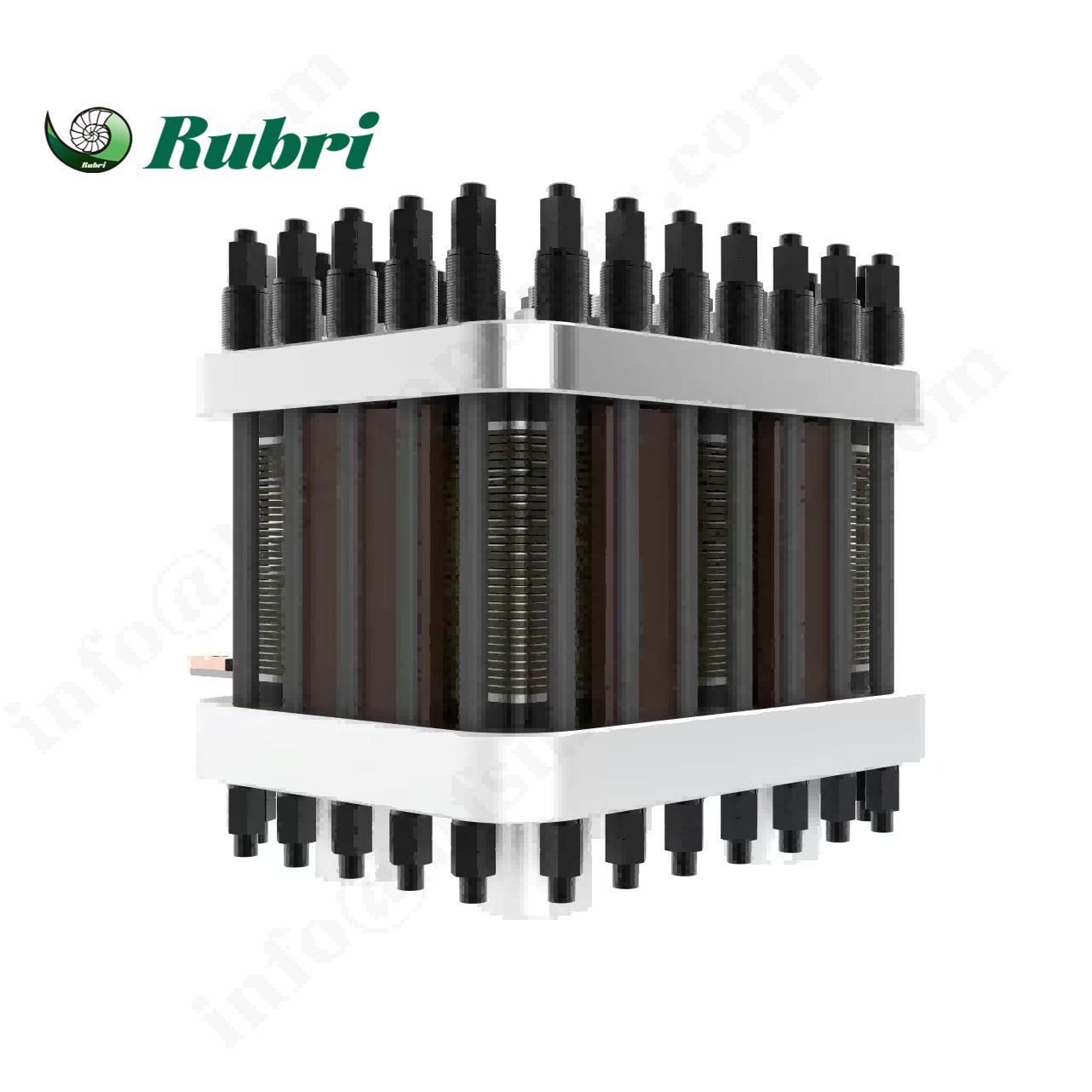
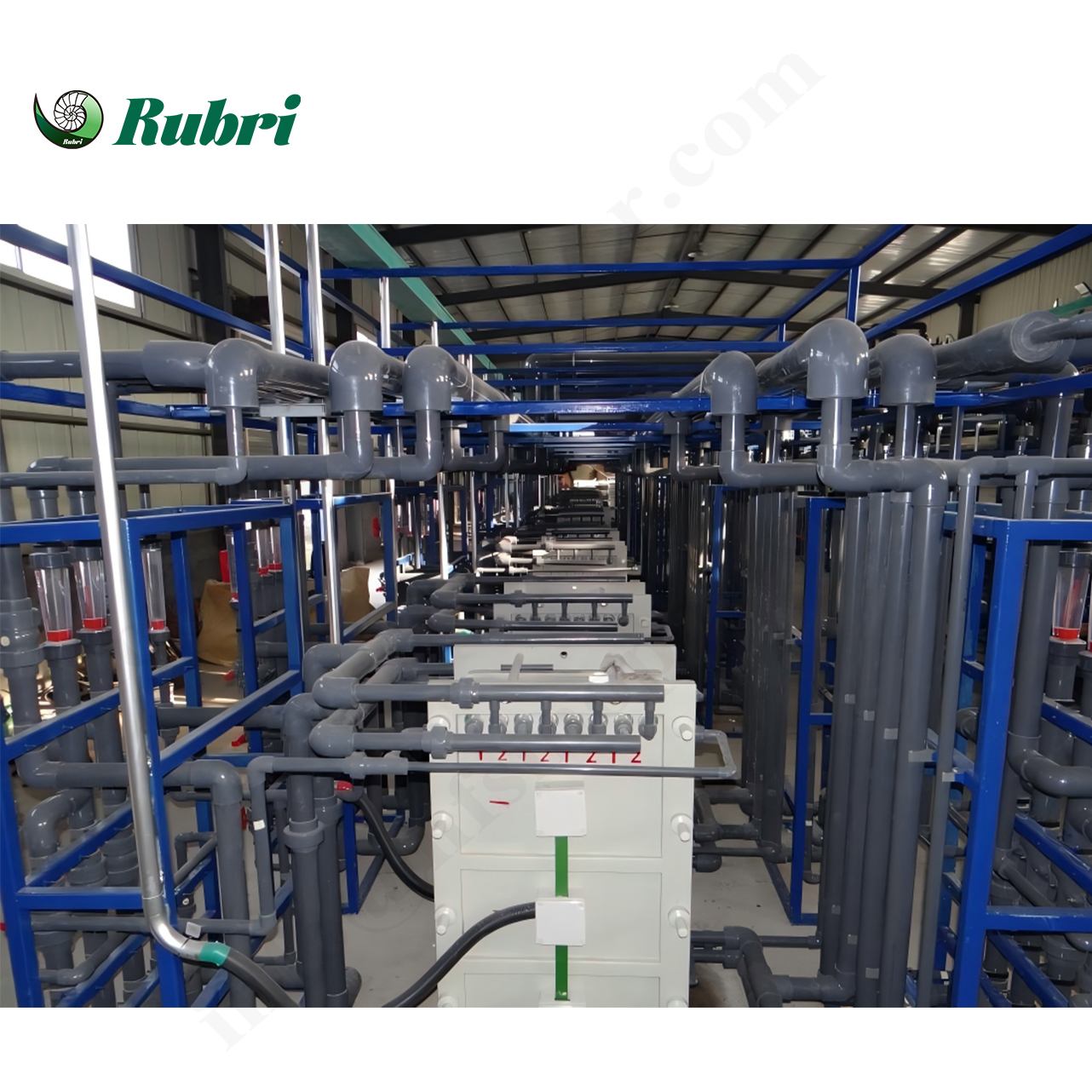
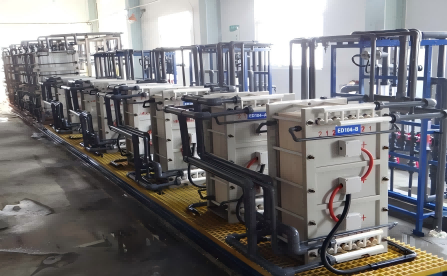
A eletrodiálise por membrana bipolar (BMED) é uma tecnologia avançada de separação eletroquímica que utiliza uma pilha de membranas especializada para converter diretamente sais em seus respectivos ácidos e bases. O componente principal é a membrana bipolar (BPM), que consiste em uma camada de troca catiônica e uma camada de troca aniônica laminadas em conjunto. Sob a influência de um campo elétrico de corrente contínua (CC), a BPM catalisa a dissociação de moléculas de água em sua junção, produzindo íons H⁺ e OH⁻. Esses íons migram através da pilha de membranas para reagir com os ânions e cátions de uma solução salina, gerando, assim, produtos ácidos e básicos simultaneamente.
Configurações do sistema
Os sistemas BMED são categorizados principalmente com base no design de seus pares de células:
Sistema de dois compartimentos: A configuração mais simples, consistindo em membranas de troca bipolar e monopolar (aniônicas ou catiônicas) alternadas. É compacto e eficiente em termos energéticos, mas pode produzir produtos com menor pureza.
Sistema de três compartimentos: Esta é a configuração industrial mais utilizada. Apresenta uma unidade repetitiva de uma membrana bipolar (BPM), uma membrana de troca catiônica (CEM) e uma membrana de troca aniônica (AEM), criando três compartimentos distintos: um compartimento central para sais, um compartimento para ácidos e um compartimento para bases. Este projeto garante alta pureza do produto e separação eficiente.
Sistemas multicompartimentais: Esses projetos mais complexos (por exemplo, quatro ou cinco compartimentos) são empregados em aplicações especializadas que exigem a separação de múltiplas espécies iônicas ou para alcançar gradientes de concentração muito elevados.
Principais vantagens
O BMED oferece diversas vantagens convincentes em relação aos processos químicos convencionais:
Processo ecológico e sustentável: A tecnologia não requer a adição de produtos químicos externos (como ácidos ou bases fortes para neutralização). Sua principal entrada é sal e água, e suas principais saídas são ácido e base, resultando em um processo de circuito fechado com descarga líquida quase nula.
Alta pureza do produto: A BMED pode produzir ácidos e bases de alta pureza. Por exemplo, é capaz de fabricar hidróxido de lítio (LiOH) de grau eletrônico sem contaminação por sódio, o que é fundamental para aplicações em baterias.
Recuperação e Valorização de Recursos: Transforma sais residuais (ex.: NaCl, Na₂SO₄, Li₂SO₄) de efluentes industriais em valiosos produtos ácidos e alcalinos, convertendo um problema de descarte em uma oportunidade econômica.
Eficiência energética e custo-benefício: Operando em temperatura e pressão ambientes, o BMED apresenta menor consumo de energia em comparação com processos térmicos como a evaporação ou o método tradicional de caustificação para a produção de LiOH. Os custos operacionais consistem principalmente em eletricidade e depreciação de equipamentos.
Alto rendimento e seletividade: O processo é altamente seletivo e pode atingir rendimentos quase quantitativos. Na produção de LiOH, por exemplo, a perda de lítio é mínima, resultando em uma taxa de recuperação superior a 99%.
Principais aplicações
A tecnologia BMED encontrou aplicações diversas e impactantes em vários setores:
Produção de Ácidos/Álcalis Orgânicos: Converte eficientemente sais de ácidos orgânicos (ex.: lactato de sódio, citrato de sódio, gluconato de sódio, sais de aminoácidos) diretamente em suas formas ácidas livres. Da mesma forma, pode regenerar bases orgânicas como aminas de dessulfurização e líquidos iônicos sem introduzir cátions externos.
Utilização de recursos de salmoura e sais residuais: Em vez da evaporação e cristalização, processos que consomem muita energia e geram resíduos sólidos, o BMED converte sais inorgânicos de águas residuais industriais em HCl/NaOH ou H₂SO₄/NaOH reutilizáveis, resolvendo os problemas de resíduos e de aquisição de matéria-prima.
Síntese Química de Alta Pureza: Uma aplicação emblemática é a produção de hidróxido de lítio de grau de bateria a partir de salmouras de sulfato de lítio. O processo produz LiOH de alta pureza e ácido sulfúrico como coprodutos, com vantagens significativas em termos de qualidade, rendimento e impacto ambiental.
Remediação Ambiental e Economia Circular: A BMED é parte integrante dos programas de descarga zero de líquidos (ZLD) em setores como galvanoplastia, processamento de terras raras e alimentos e produtos farmacêuticos, onde possibilita a recuperação de produtos químicos valiosos a partir de fluxos de resíduos complexos.
Indústrias farmacêutica e alimentícia: A tecnologia é utilizada para a purificação e concentração suaves de compostos sensíveis ao calor, como vitaminas, aminoácidos e outros produtos de base biológica, preservando sua integridade.
IntroduçãoA eletrodiálise por membrana bipolar (BMED) é uma tecnologia avançada de separação eletroquímica que utiliza uma pilha de membranas especializada para converter diretamente sais em seus respectivos ácidos e bases. O componente principal é a membrana bipolar (BPM), que consiste em uma camada de troca catiônica e uma camada de troca aniônica laminadas em conjunto. Sob a influência de um campo elétrico de corrente contínua (CC), a BPM catalisa a dissociação de moléculas de água em sua junção, produzindo íons H⁺ e OH⁻. Esses íons migram através da pilha de membranas para reagir com os ânions e cátions de uma solução salina, gerando, assim, produtos ácidos e básicos simultaneamente.
consulte Mais informação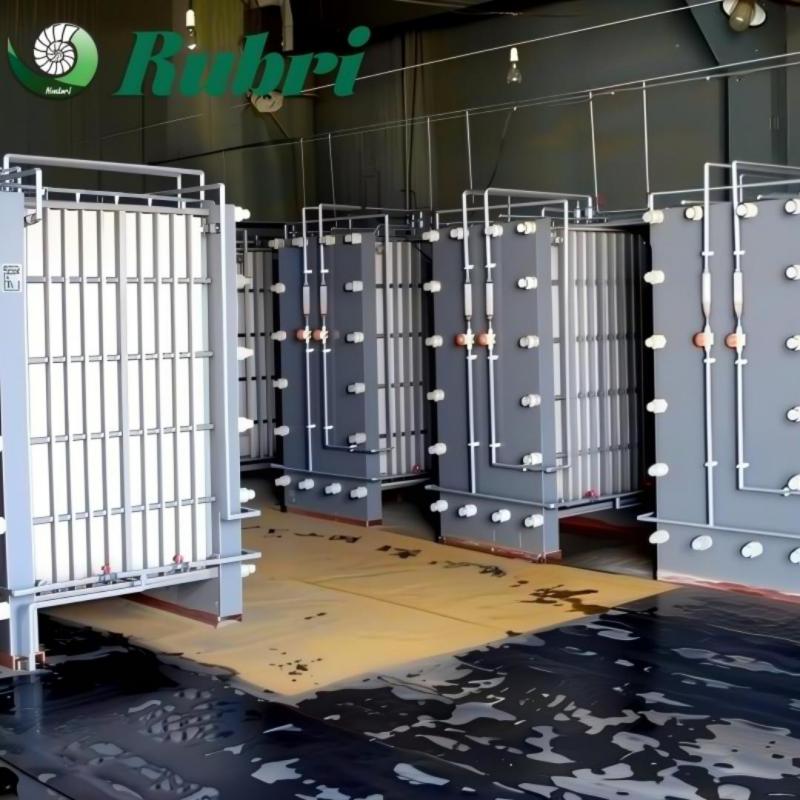
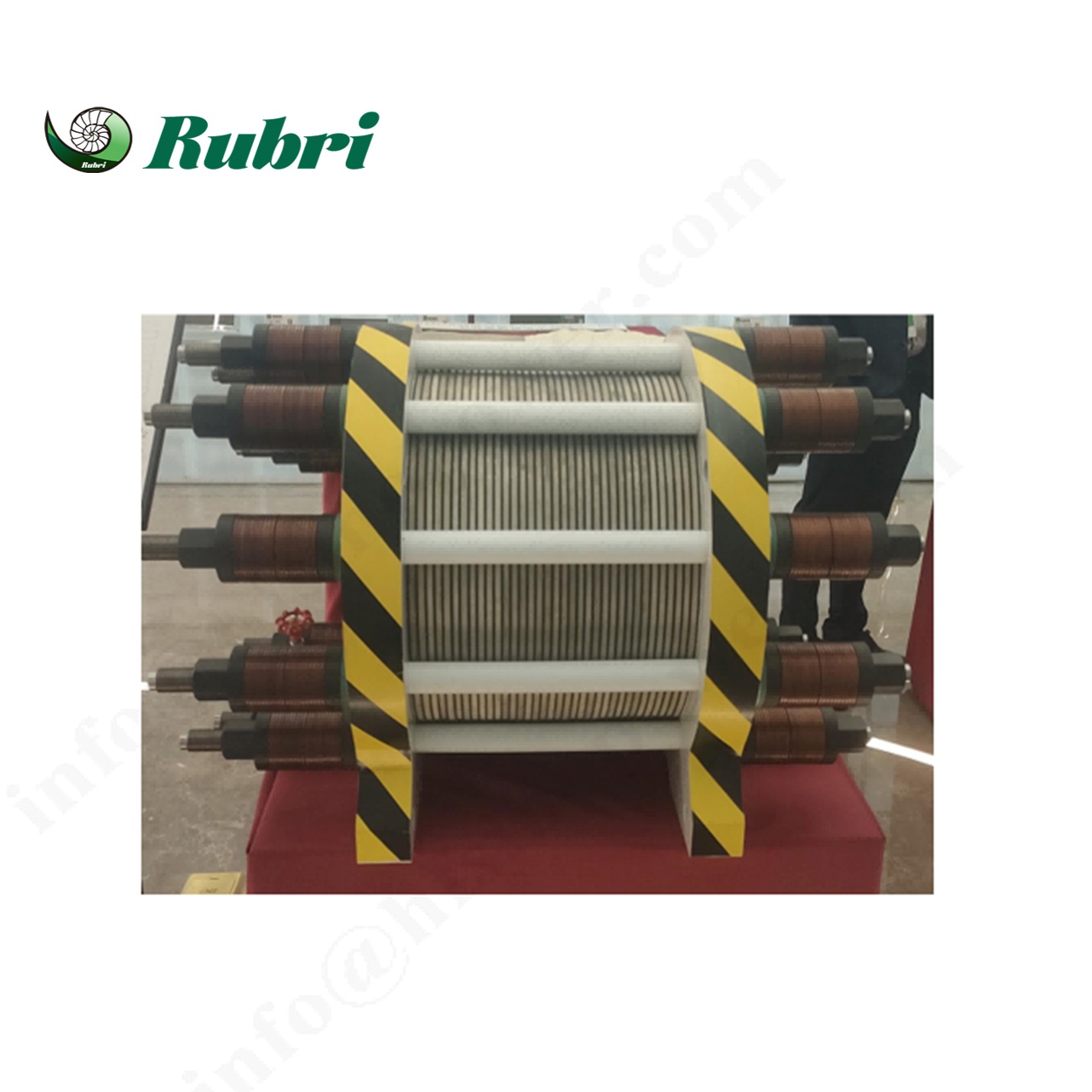
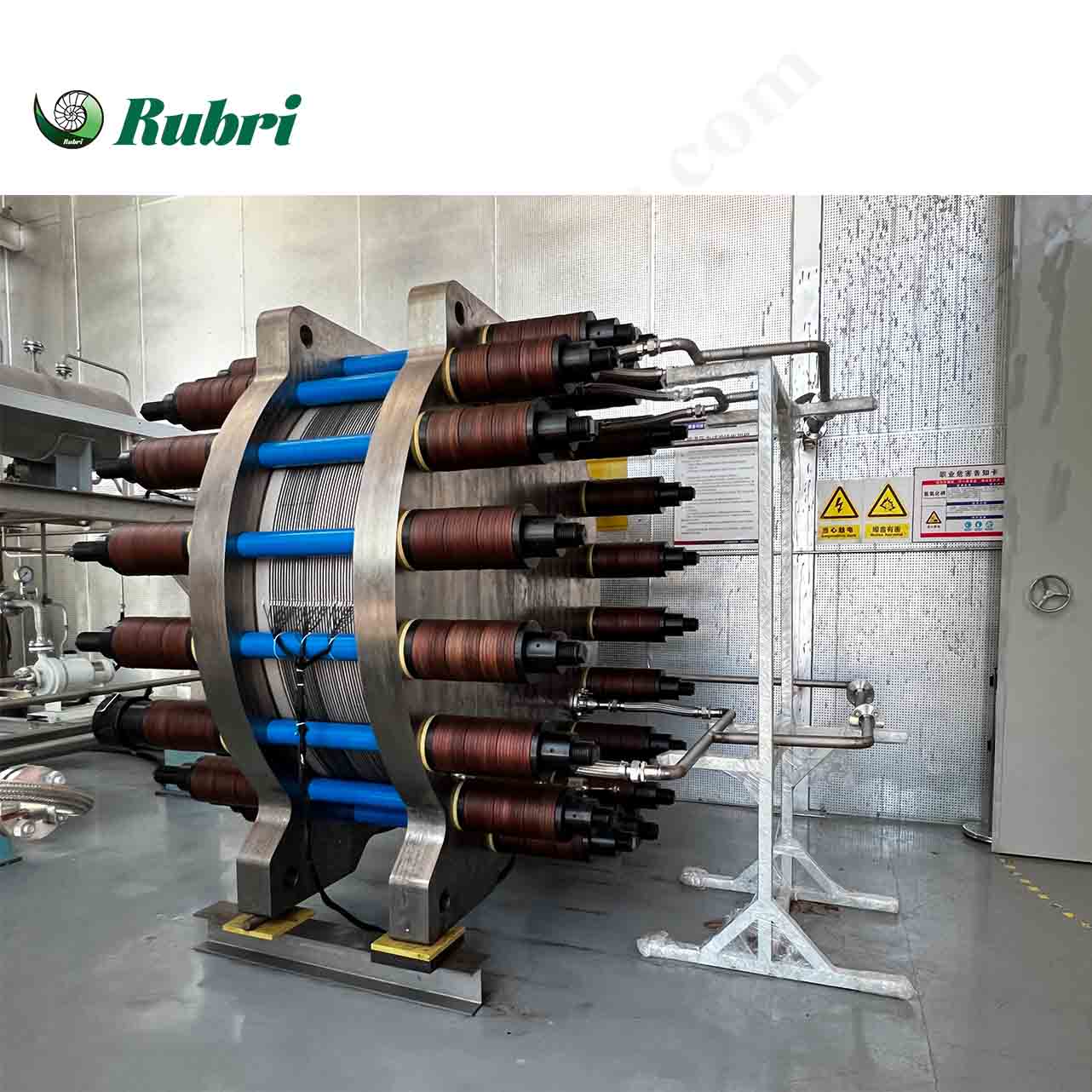
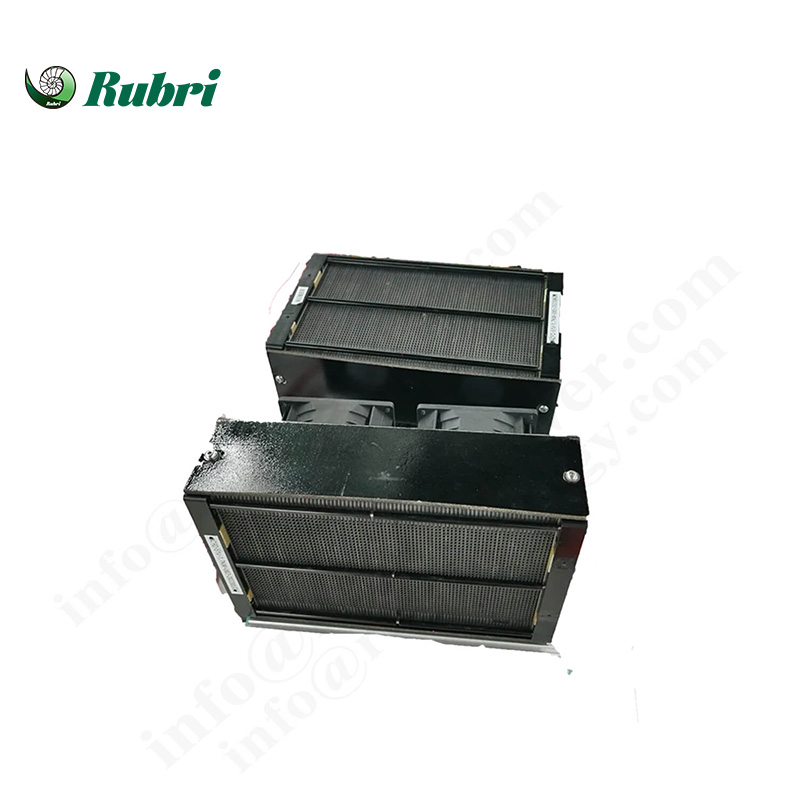
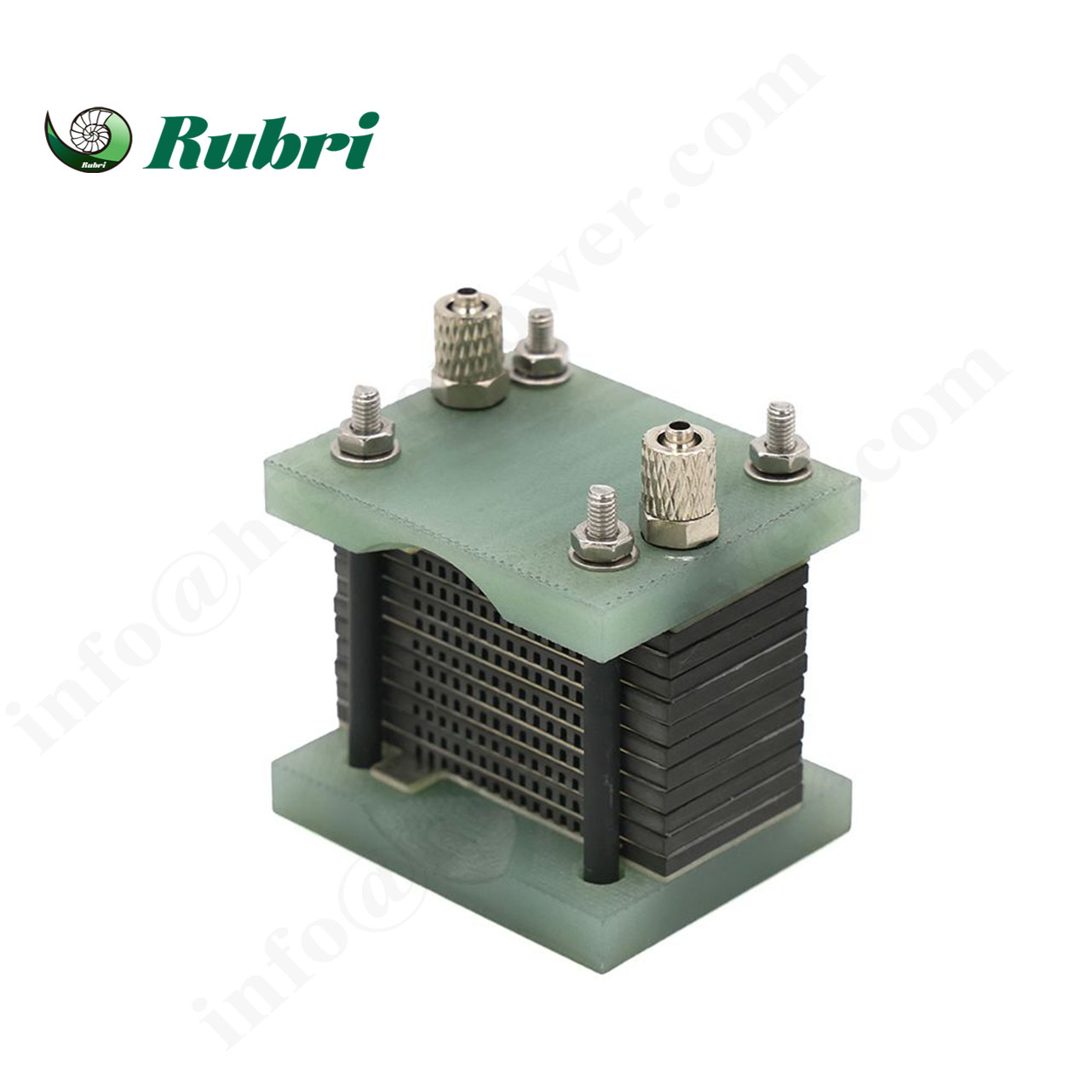
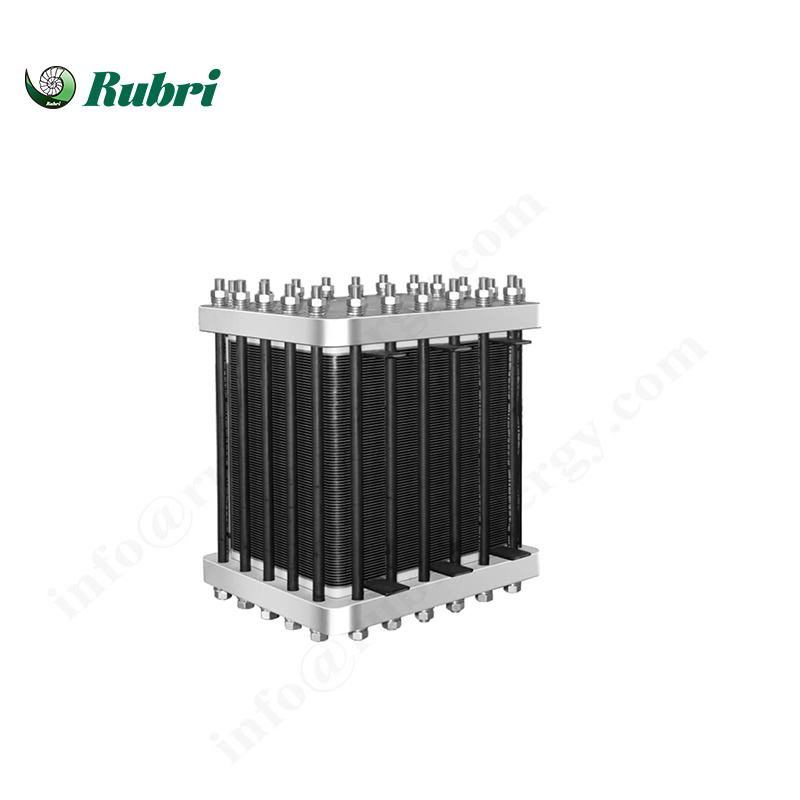
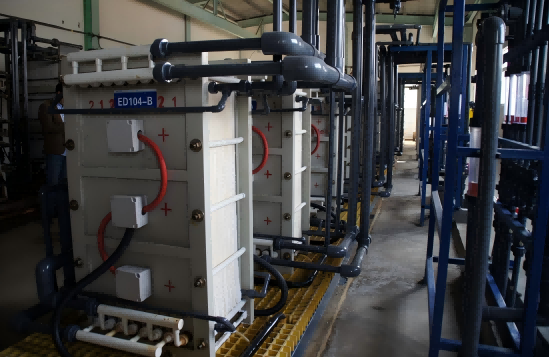
O eletrodialisador é um equipamento essencial para a separação de íons, que utiliza a tecnologia de eletrodiálise. Através da aplicação de um campo elétrico CC e da utilização de membranas de troca aniônica e catiônica, ele realiza a migração e separação direcionada de íons em líquidos. Com uma estrutura simples e confiável, é classificado em dois tipos: com fixação por parafuso e com integração hidráulica, para diferentes escalas de uso. Amplamente aplicado na dessalinização de água do mar, tratamento de efluentes industriais, concentração de alimentos, purificação farmacêutica e processamento de eletrólitos para novas energias, ele realiza com eficiência a dessalinização, a concentração e a remoção de impurezas iônicas em soluções.
consulte Mais informação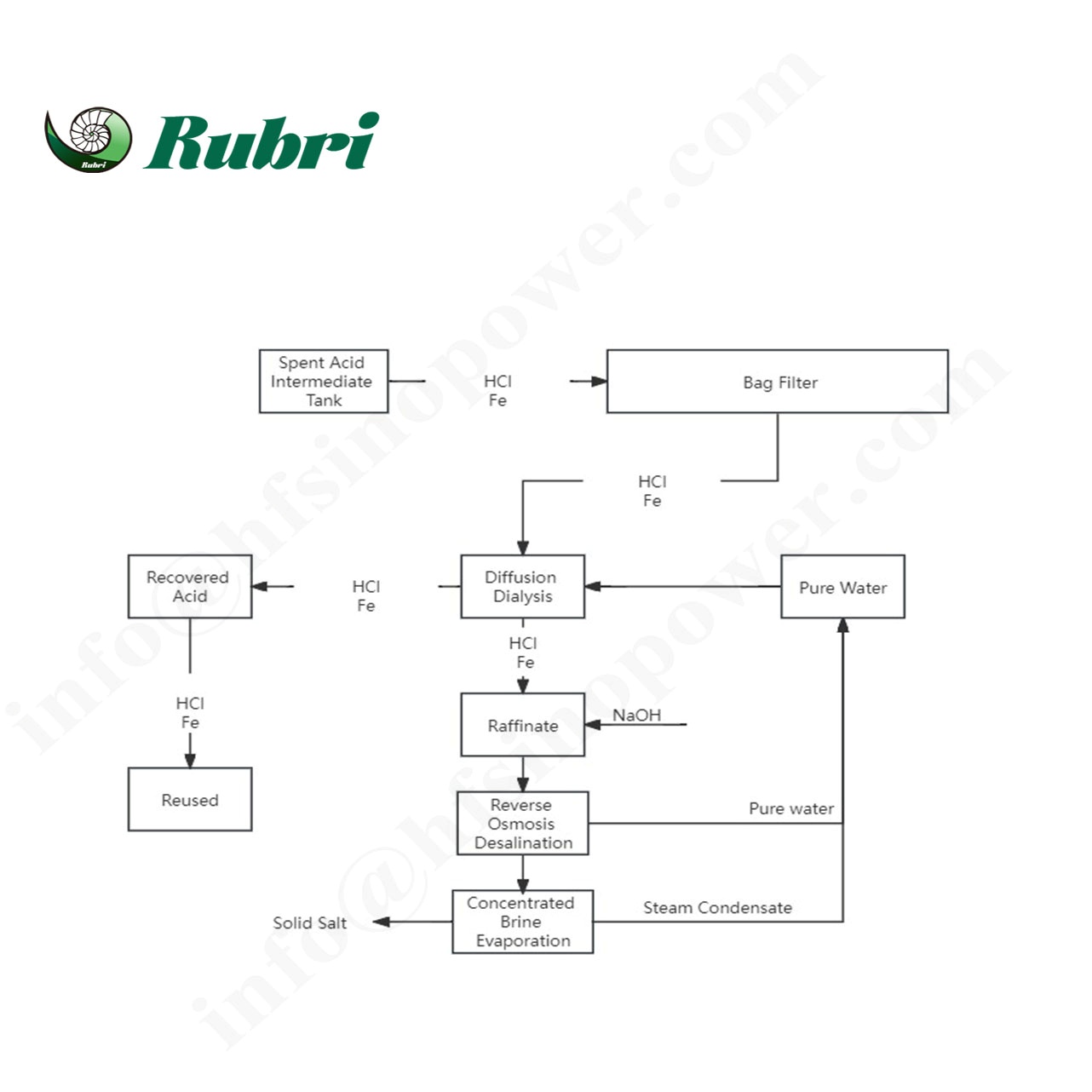
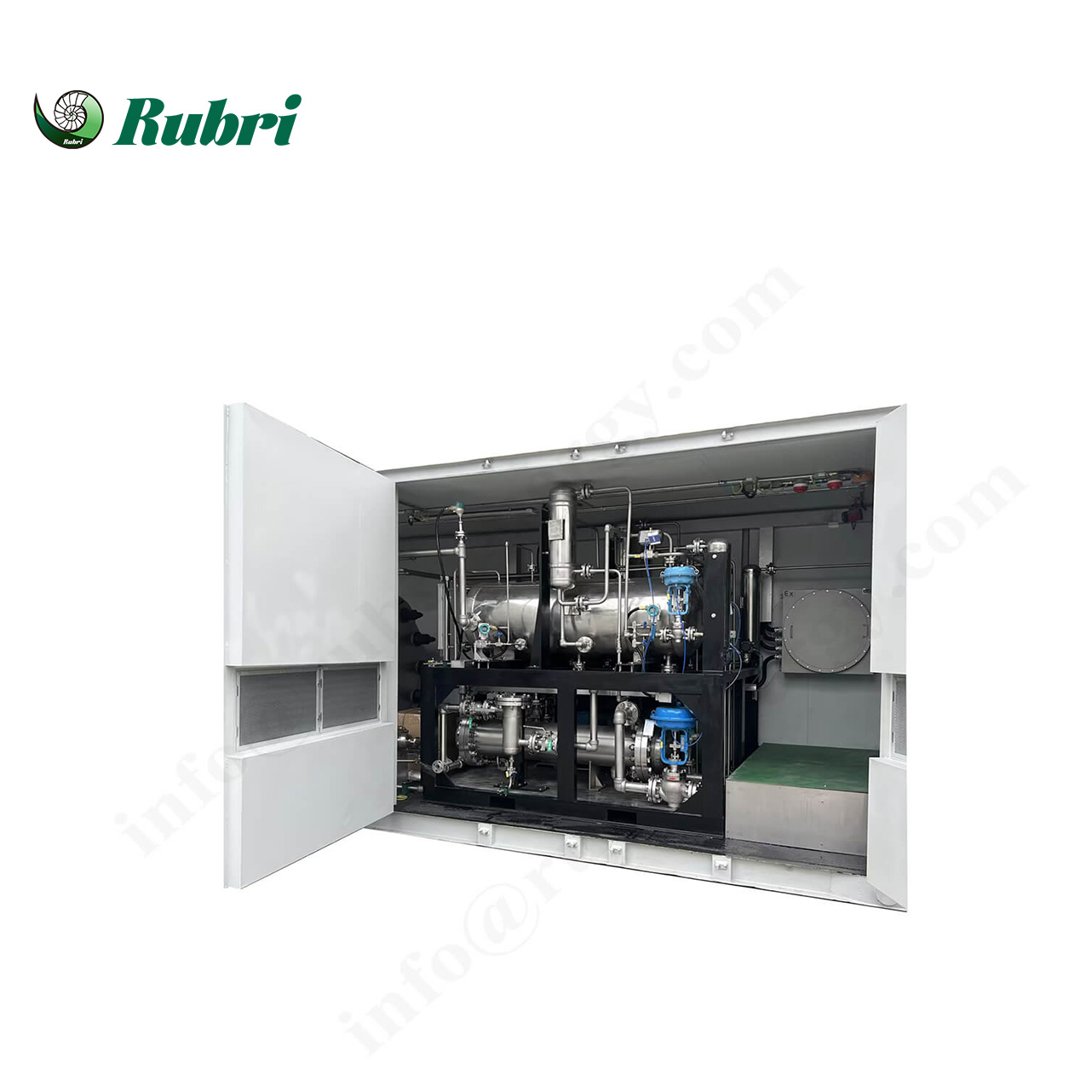
Rubri é proficiente em tecnologia de diálise por difusão e possui habilidades em projetar e implementar soluções personalizadas, fornecendo aos clientes soluções abrangentes de produção ecológica e limpa.
consulte Mais informação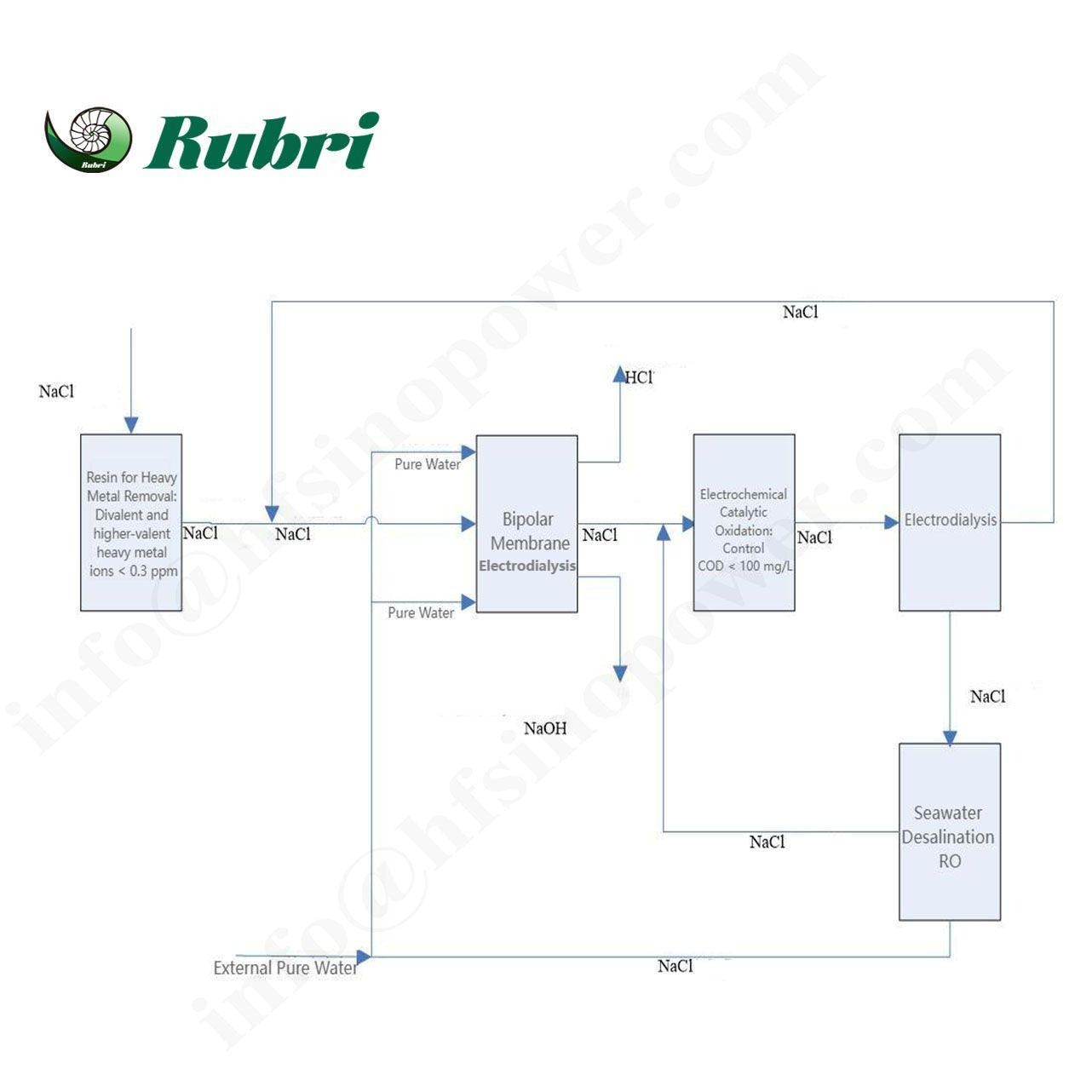
Rubri é proficiente em tecnologia de eletrodiálise com membrana bipolar e possui habilidades em projetar e implementar soluções personalizadas, fornecendo aos clientes planos de produção abrangentes, ecológicos e limpos.
consulte Mais informação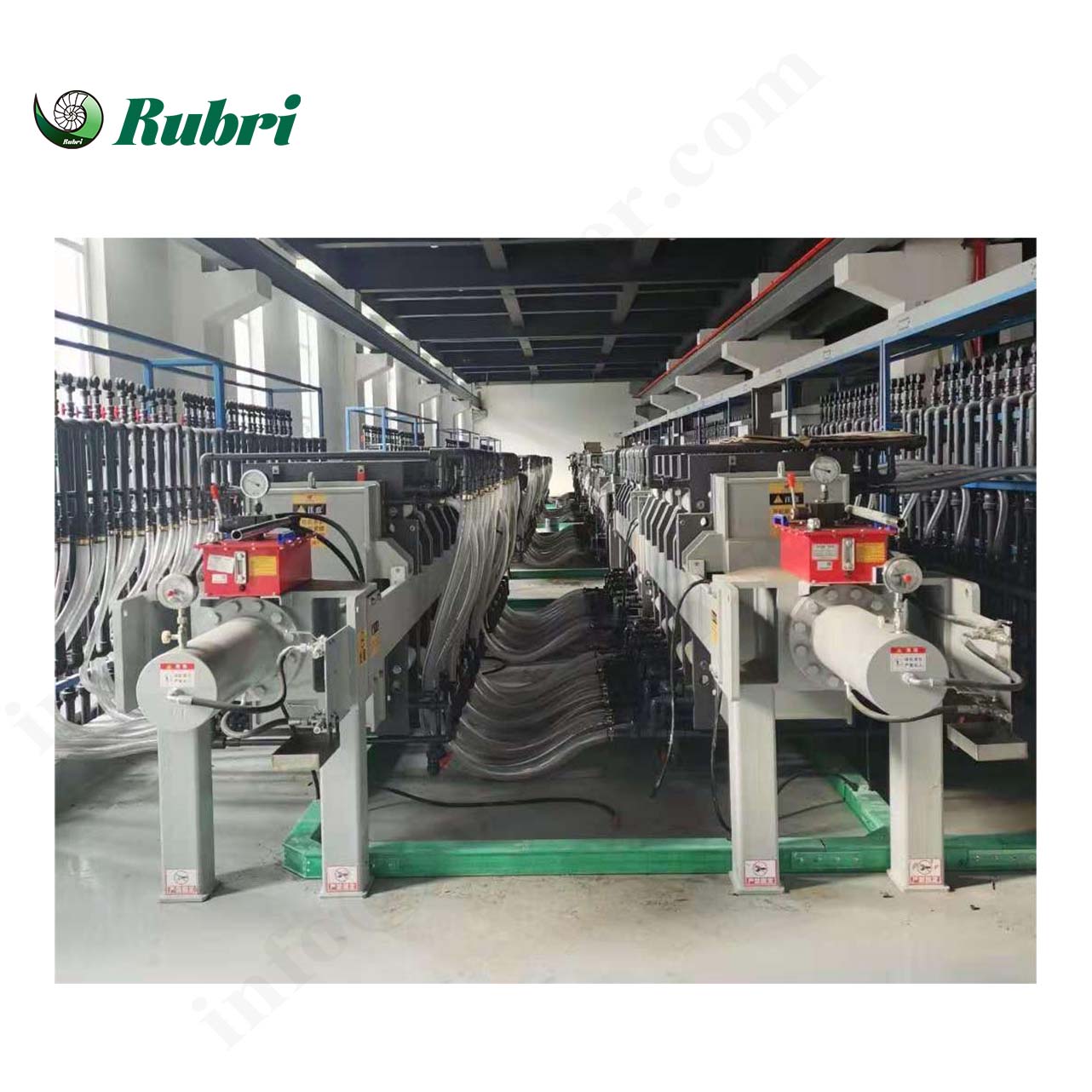
Princípio fundamental da eletrodiáliseO cerne da tecnologia de eletrodiálise reside na combinação do campo elétrico com a tecnologia de membrana seletiva, cujo princípio específico se divide em duas partes:1. Efeito de acionamento do campo elétrico CCSob a ação de um campo elétrico CC, os ânions e cátions na solução movem-se direcionalmente: os cátions migram em direção ao eletrodo negativo, enquanto os ânions migram em direção ao eletrodo positivo.2. Efeito de peneiração seletiva das membranas de troca iônicaDois tipos de membranas de troca iônica são usados no sistema para realizar a separação de íons:Membrana de troca catiônica: Permite apenas a passagem de cátions (ex.: Na+).+, Ca2+, Mg2+) para passar, bloqueando os ânions.Membrana de troca aniônica: Permite apenas a passagem de ânions (ex.: Cl⁻).-, ENTÃO42-) para passar, bloqueando os cátions.
consulte Mais informação
Essa tecnologia se baseia no princípio da eletrodiálise com membrana bipolar. Sob a ação de um campo elétrico de corrente contínua, ela utiliza membranas bipolares para dissociar eficientemente as moléculas de água em íons de hidrogênio e íons hidróxido. Esse processo converte, então, de forma direcional, os sais presentes nas águas residuais da galvanoplastia (como cloreto de sódio, sulfato de sódio, etc.) em ácidos correspondentes (como ácido clorídrico, ácido sulfúrico) e bases (como hidróxido de sódio), atingindo os objetivos duplos de purificação da água residual e recuperação de recursos.
consulte Mais informação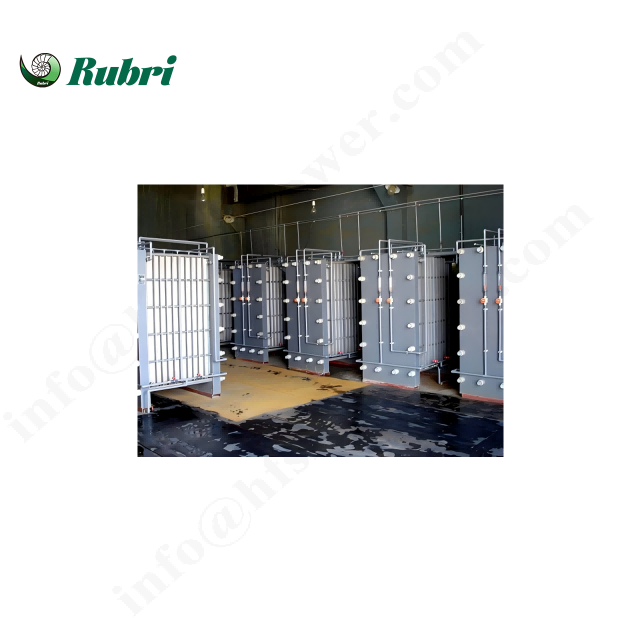
Princípio fundamental da eletrodiáliseO cerne da tecnologia de eletrodiálise reside na combinação do campo elétrico com a tecnologia de membrana seletiva. Seu princípio específico se divide em duas partes:Efeito de condução do campo elétrico CC e do gradiente de concentraçãoSob a ação de um campo elétrico CC ou gradiente de concentração, ânions e cátions na solução se movem direcionalmente: os cátions migram em direção ao eletrodo negativo, enquanto os ânions migram em direção ao eletrodo positivo; os solutos se movem de soluções de alta concentração para soluções de baixa concentração.Efeito de peneiração seletiva de membranas de troca iônicaDois tipos de membranas de troca iônica são usados no sistema para realizar a separação de íons:Membrana de troca catiônica: Permite apenas a passagem de cátions (ex.: Na⁺, Ca²⁺, Mg²⁺), bloqueando a passagem de ânions.Membrana de troca aniônica: Permite apenas a passagem de ânions (ex.: Cl⁻, SO₄²⁻), bloqueando a passagem de cátions.
consulte Mais informação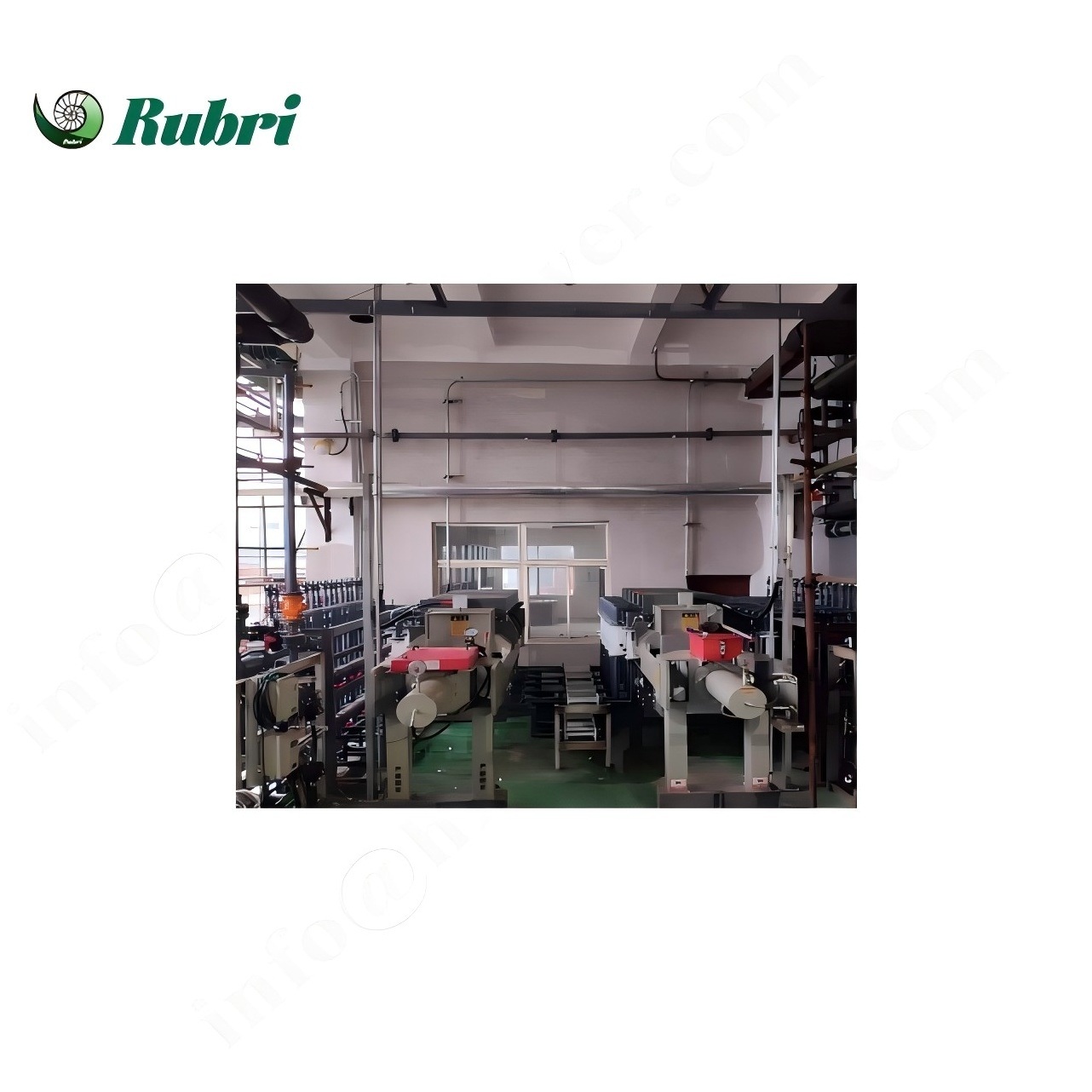
Princípio fundamental da eletrodiálise de membrana bipolar (BPED)A essência da tecnologia BPED reside na combinação de campo elétrico, tecnologia de membrana seletiva e a capacidade única de divisão da água das membranas bipolares.1. Efeito de condução do campo elétrico CCSob um campo elétrico CC, os íons migram direcionalmente: os cátions movem-se em direção ao cátodo, enquanto os ânions movem-se em direção ao ânodo.2. Funções da MembranaMembrana bipolar (BPM): divide a água (H2O) emH+eOH−Íons sob a ação do campo elétrico, fornecendo uma fonte para a produção de ácidos e bases.Membrana de troca catiônica (CEM): Permite seletivamente a passagem de cátions.Membrana de troca aniônica (AEM): Permite seletivamente a passagem de ânions.Ao dispor essas membranas alternadamente, os sais podem ser convertidos nos ácidos e bases correspondentes.
consulte Mais informação


 IPv6 SUPORTADO POR REDE